Category: Enchantments

  • I originally began writing this as an exploration of historiolae and their narratives within a Cyprianic context. To be sure, historiola as a thing is the basis for this piece, but my focus has changed. I want to zoom in on “Saint Cyprian as a Healer and Further Considerations on Sorcerous Poetics” from Jose Leitao’s Opuscula Cypriani, specifically on that last part, sorcerous poetics, elaborating on ideas around my personal perspective; how I see incantations, the lyricism of the charm or historiola, and what it portends to utter these lyrical narratives. My exploration will be via a collage of sources from several books and places, with my thoughts interspersed in between, as inspiration has led me.

    In crude terms the historiola is a narrative (often rhyming) one voices in order to achieve X desire. The charmer (or insert whichever title preferable that points to the one who voices the narrative), as an individual within a community and immersed in a landscape, is a person embedded in a living terrain of interactions. This terrain is like a breathing web of continuously moving connections. Immersed within this web, the historiola can be seen as a thing that erupts like an out-breath through the voice, a self in response to the terrain and to desire. From Henni Ilomaki’s The Self of a Charm, “Charms can be seen as an act of communication, in which it is assumed that the singer’s message has a (supranormal) recipient. A charm can thus be seen as speech (parole) containing a given message. Formally speaking a charm is a monologue uttered against another’s force” (53). They are “texts for specific rites, for which the reciter must be entirely committed; a vehicle for momentary yet intense influence, which draws each charm-reciter into that influential power” (55). The historiola as a charm enfolded with a specific desire, arises out of a milieu like an out-breath, and it is inextricably in-relation with the (a) terrain, the body, the voice, the charmer, all within a web of reciprocal interactions.

    In David Abram’s The Spell of the Sensuous he illustrates how we, people, live in a an embedded perceptual field of meanings in an animate flesh-world of relationships, not just human to human, but human and the landscape, the topography, the flora, the fauna, etc. His “field of meanings” is what arises out of this sensuous relationship between the human and more than human embedded in this landscape. It is a web of interlaced threads, the human perceptual experience in place, the more than human, and the terrain within a temporal influx and efflux.

    We are all participants in this field of meanings, within a conversant constantly interacting landscape. From here Abrams proposes arises language. Language arises out of this interconnected perceptual experience of place. The voice and the breathe give a form to experience, yet semantic-ally condensed. “The sensing body is not a programmed machine but an active and open form, continually improvising its relation to things and to the world” (49). All are in continuous sense-uous involvement and by “affirming the animated-ness of perceived things do we allow our words to emerge directly from the depths of our ongoing reciprocity with the world” (56). Hence, as our bodies are enmeshed in this breathing web, and if language is met in the body, through the body, as in the body as a place of encounter, then voice is another expression of the body in relation to the living terrain of forms and beings. Moreover, when what is voiced mirrors this lyrical involvement of form and movement, then potentially one enters into a field of creation through influence.

    Now I want to slide into Sorcerous Poetics.

    In the typical realms of Cyprian magic, the incantations used most frequently take the form of historiolae, stories, be them canonical or not, through which a certain power, entity or aspect of that power or entity is called forth for a particular action to be named and discussed in the remaining incantation. [Involving] linguistic artifices that produce a sought-after sound in order to make up what might be perceived as a powerful utterance.

    The presence of such linguistic and poetic tricks brings us to the idea that there is no monolithic source of power when dealing with verbal folk magic. One may call upon a Saint or spirit through a predetermined incantation specific for that effect, but one can also apparently call on a certain ‘faceless’ power by the skilled use of voice and sound. Such an example can be seen in incantations which, while not calling on any power whatsoever, are used to gain power over a disease or evil by describing it in appropriate poetic verbal terms.

    Therefore, when an individual within a community in-cants particular verses, themselves arising within a particular milieu, expressing a desire through voice, said individual enacts its participation in the multifaceted field of forms and relations, of sensuous involvement, and through this enters into a field of creation where reordering through the voice (what is spoken) is possible, as, “In the Beginning God said… and in the Beginning was the Word.” The keys here are enunciating the “appropriate poetic verbal terms,” cohering the rhyme and the flow. Hence, the key is unlocking the rhyme that mirrors the temporally emplaced interactions in the field of meaning, translating desire (what is desired) through this web to allow for influence/change. One can see it as a spontaneous dance between desire and the breathing web, where the poetic voice is the vehicle that influences.

    In his commentary, Jose Leitao is focusing specifically on folk magic within a Cyprianic context. Yet I find that one can dive into this and need not conscript it to folk magic, and extract it as such exclusively. One can instead perceive the jewels and gems that form historiolae, and from there explore ones own participation within ones own animate landscape. Voicing for oneself a lyrical involvement, in-line with a Cyprianic context yet embedded in one’s own terrain.

    To condense what I aim to express, if language arises in relation, and lyrical language holds the key to express this reciprocal web while also allowing for desire to be a channel for creation, then taking a cue from Jose Leitao, we can begin to weave “our” own historiolae fed by the same Cyprianic stream.

    My aim here was to cohere a thought by various ways, a thought that arose out of, and inspired by, this section of Opuscula Cypriani written by Jose Leitao. True to form, towards the end of this section he adds his own lyrical creations given as examples, cementing the idea that Cyprianic charms or historiolae can and should be contemporaneously explored.

    • David Abrams (1996). The Spell of the Sensuous.
    • Henni Ilomaki (2004). “The Self of a Charm.” In Charms And Charming In Europe, ed. by Jonathan Roper (pp. 47-57).
    • Jose Leitao (2019). “Saint Cyprian as a Healer and Further Considerations on Sorcerous Poetics.” Opuscula Cypriani (pp.103-11).

    ~~~

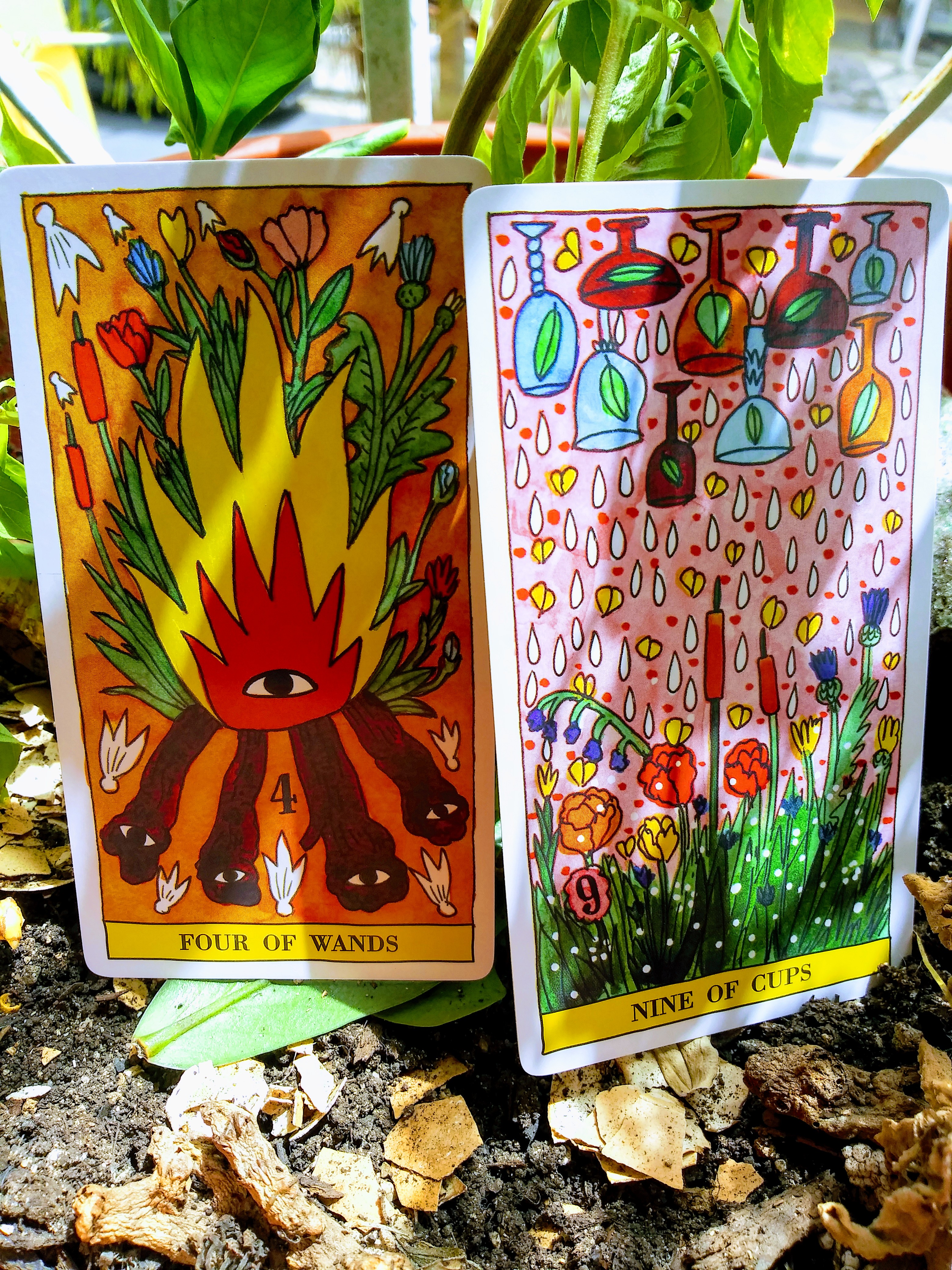
  • Tarot del Fuego Fournier tarot deck
    Tarot del Fuego by Ricardo Cavolo published by Naipes Heraclio Fournier, Spain, 2014.

    The eve of St. John the Baptist is here and for me the actual eve, the night, of this day is about imaginal, and not so imaginal, escapades. Wild nights under the starts, ecstatic dancing, and a communion between the living and the spirits (including the dead). Since this is about entering into more fluid territory, I want to talk a little about tarot and dreaming, or dreaming tarot.

    Through my play with the cards I’ve found that dreaming with tarot is an excellent way of loosening the boundaries around the tarot and the signification of the cards. I mean here both using tarot cards to describe (de-code) dreams as well as using the cards for dreaming. What I’ve found through doing this is that the card image bends to dream logic. For example, coins can become mirrors, portals, heads, seeds, fruits, or even summoning circles. What is coin breaks down and morphs into varied shapes and things encountered in dream. The same goes for swords, batons, and cups. What is sword blurs beyond recognition so that I as the reader seeing the cards and having experienced the dream recognize the multi-valent capabilities of the thing portrayed on the card (s), the image. Meanings loose their solid state, warping into imaginal dimensions, coaxed into a realm outside objective frameworks.

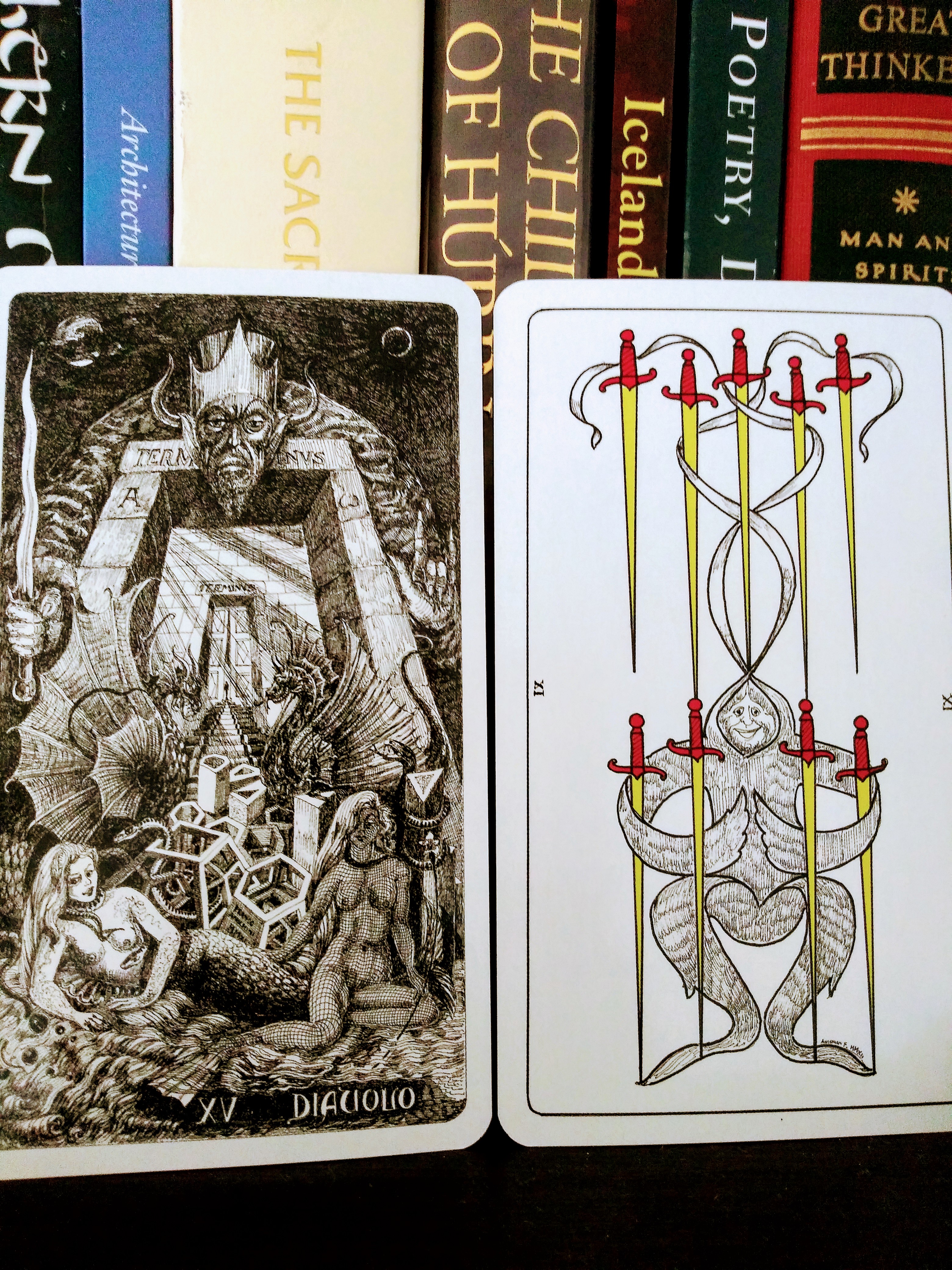
    Fantarocco di Franco Anichini, published by Modiano, Italy.
    Fantarocco di Franco Anichini, published by Modiano, Italy.

    To describe dreams with the tarot:

    • Immediately as you wake up before speaking, shuffle the deck and lay out cards, a handful at most.
    • While you’re shuffling and laying out the cards, ask about your dream, ask the cards to describe it or show you your dream.
    • You want to start small and build up, as if you were having a conversation with the cards. By small I mean lay out a handful of cards first and build up from there.
    • Also, it is best to keep the deck next to you while you sleep, on the night table or the floor.
    • Review your dream as you read the cards.
    • Think about the ways in which the cards on the table/bed describe your dream and what it says about it.

    On the other hand, using the cards to dream, while still allowing for the same malleability of significations and experiences, can also open up interesting and often profound avenues of exploration.

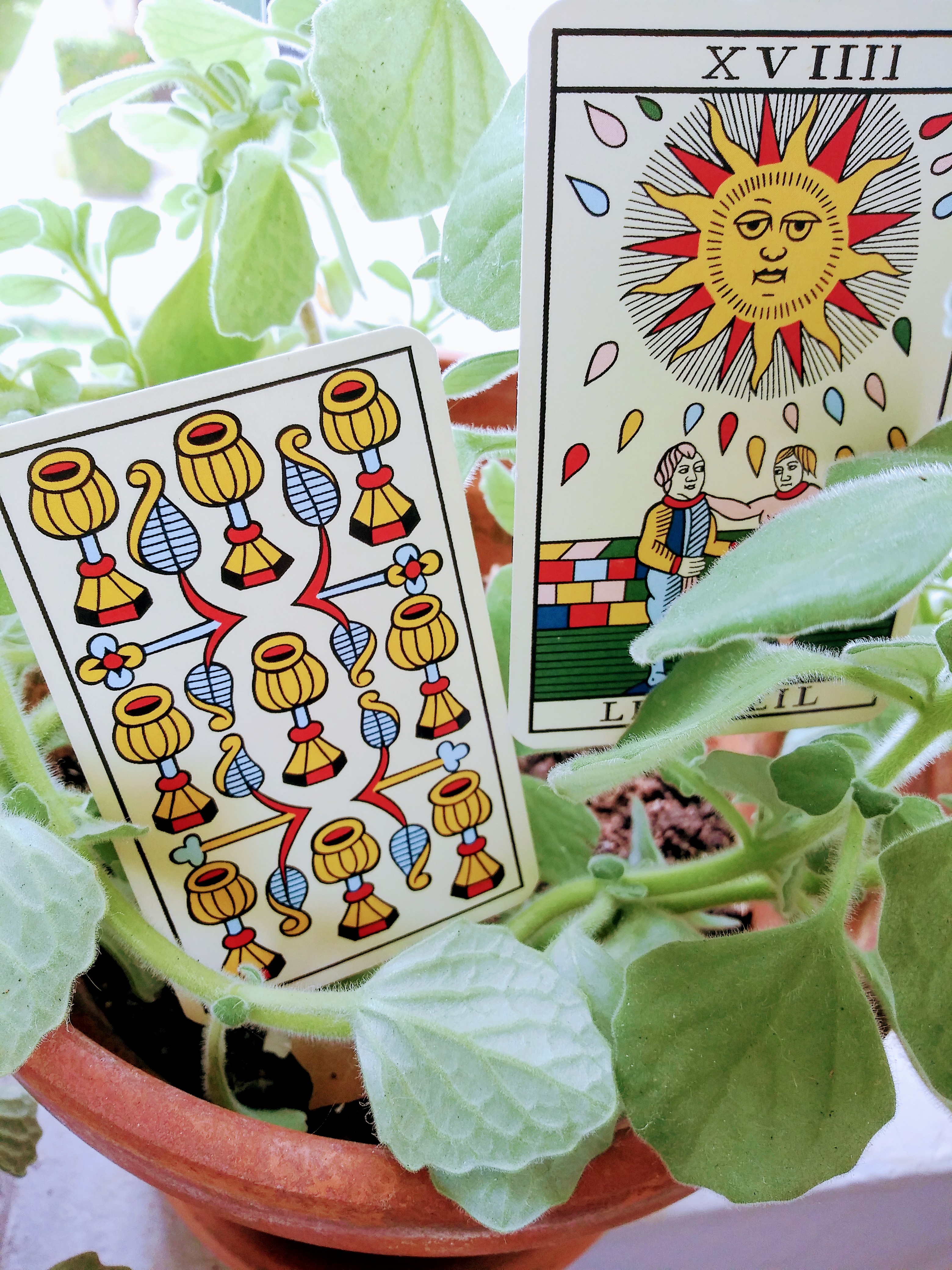
    Jean Noblet Tarot de Marseille, reproduced by Jean-Claude Flornoy, editions le-tarot.com, France, 2014.
    Jean Noblet Tarot de Marseille, reproduced by Jean-Claude Flornoy, editions le-tarot.com, France, 2014.

    To dream with the tarot:

    • Choose a deck, preferably a deck you keep hot, that you use often.
    • Have a question or purpose/focus in mind. (What do you want to find/encounter/discover in the dream? What you want answered through the dream?).
    • Before sleep play with the deck, and look at the images.
    • Take your time doing so, along the lines of meditative contemplation of the cards in the deck.
    • While thinking on your question and/or focus, choose no more than two cards (three or more cards gives muddled dreams), that you feel are descriptive to your goal/question.
    • Look at these cards just before sleep and lay them next to your head before laying down, you can also put them under your pillow if you prefer.
    • Sleep.

    When you awake, recall your dream and look at the cards again, thinking on how they addressed what you wanted to uncover, and also review what you actually uncovered. I’ve found that this method needs to be done often so as to really pinpoint a couple things. One is finding the right hot deck that is conducive for your dreams, to how you dream and your dream landscape, not all decks are the same. I’ve found that the best decks for me are less than a handful from my collection. Second, it is learning the language of the cards within imaginal territory. It takes time to bend toward different ways of seeing and reading the image (s). Third and tied with the second, it takes practice to learn to find what cards best describe what you seek in dreams. This is one of the reasons that it is best to keep the card count for this approach at no more than two.

    Now that I’ve shared a little about what I like to do with the cards besides reading for  querents and for myself, I want to close with a small prayer to St. John the Baptist:

    Sacred precursor of Christ; Sanctified in the womb; Admiration of all in the exercise of the virtues and privileges with which the creator enriched you. Angelic in chastity; Blessed apostle. Martyr, in the constancy with which in your rebuke of Herod you offered your head to the knife. Luminous prophet, of whom Christ himself declared: “Of those born of women non greater than John the Baptist.” Glorious Saint grant unto us the grace of spiritual joy, today and always. Amen.  

    On this St. John’s eve, seize the opportunity to glimpse beyond, divine, dream with the cards, and experience what unfolds for you.

    ~~~

    † I specify tarot in this post but you can replace tarot with an oracle or playing card deck. What is important is that it is a deck you use frequently.

    Natalia Lee
  • I am heartbroken about so many things both little and big, close and far. That we, as in my son, partner, and I are isolated from contact, physical, from those in our families. That fear and anxiety is the medium of the message everywhere I look. That my son was not able to enjoy the rest of his school semester with his friends in school. That when he approaches other kids the first wall put up is fear. That he has no friends near to play and run around with. That my partner and I are his sole source of entertainment besides his toys and the intervals of time we let him watch television.

    That this being the island that it is, with deeply embedded roots of colonization we will get whatever is distilled from Capitol Hill, and this distillation will be further warped and fractured. That everything “that is going on” in the health crisis masks deeper layers of complexity that have not potentially been problematized nor widely looked at. That I don’t know what the world in the context of day to day living will look like a year from now, nor even six months from now for the sake of my son’s education. That this whole ordeal has possibly/perhaps introduced discomfort and pain for my son in his development. That I am struggling in being a mother, a teacher, and also a person who works from home. That to go to the beach means breaking the law.

    That another black man was cruelly murdered and his family was left without him. That he will not see his kids grow, if he had children. That more pain is sowed, more cruelty, hatred, discord. That there are thousands upon thousands hungry and without food, without a reliable source of safety, of income, without a home.

    What will the world look like when we do step out of our hideaways and look to the sun? What constraints will be in place without my consent nor the consent of many? What limits, bifurcations, and distortions be employed?

    Have we ever really known what lies ahead even during “peaceful” times? What has been truly certain in living? What has ever been guaranteed? Did we believe that the apparatus of control would ensure our individual progress? Is there such a thing as progress, progressing unendingly in a straight line toward more, better, fuller, brighter? Have I ever been able to fully control how any thing will affect my son and his development? Can I ever truly safeguard him from all pain and suffering? Can I myself be guaranteed no pain and suffering? Or my partner?

    Is there certainty beyond the now becoming?

    There are many many many things I do not know, nor that I can hold in my hands to control. But I do know that there is this now that I am experiencing. I know that I am in relation to the landscape and this is my landscape. This is the terrain I navigate, now. The topography that unfolds with every encounter of my body with what is immediate and in proximity. My body feels sad and it is tired, heartbroken, and stained with tears.

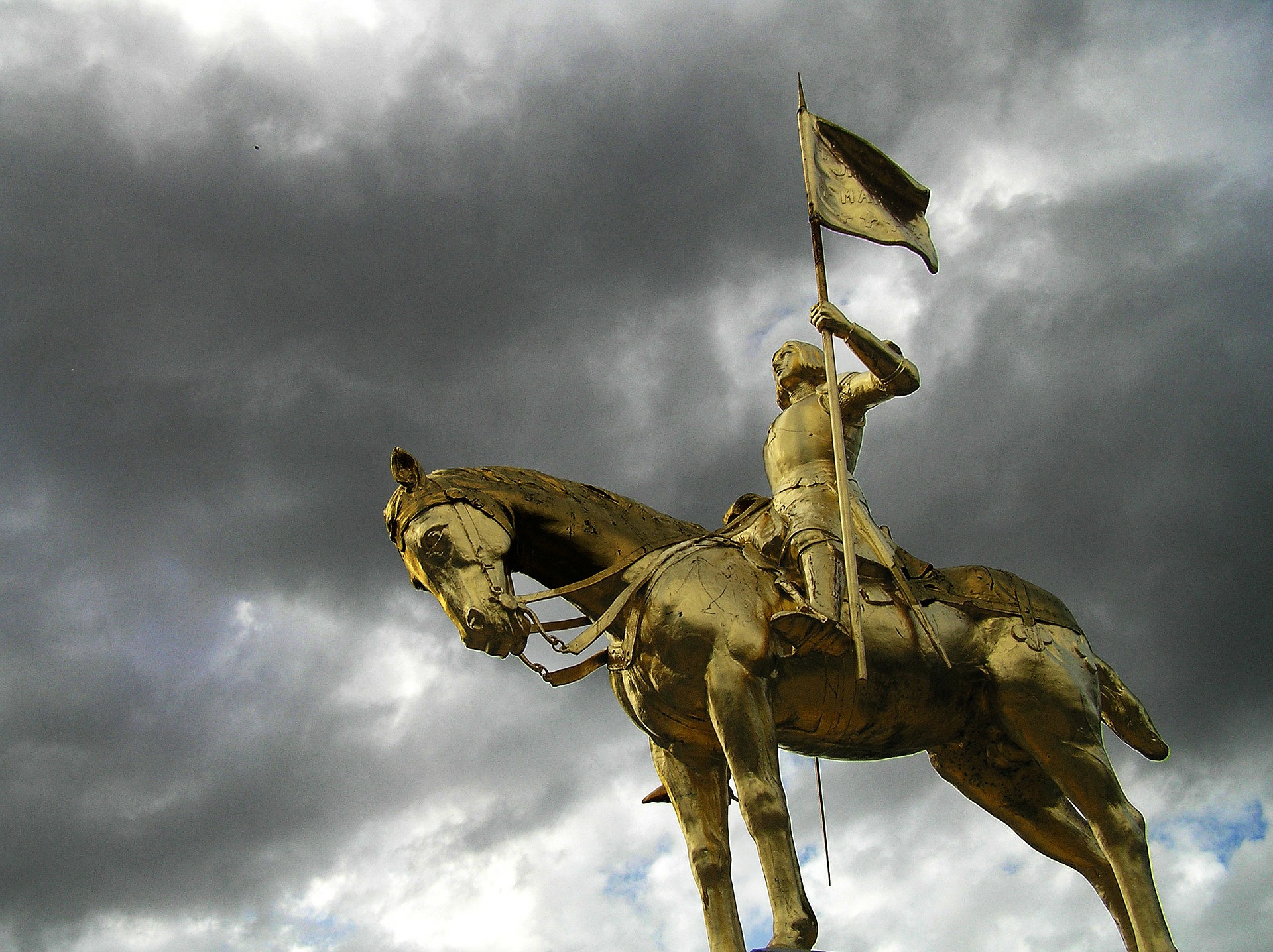
    These past days I’ve been involved in a novena to Saint Joan of Arc, one that has opened outward toward intriguing landscapes of open fields under the sun, and closed doors, rooms and halls. That maiden who heard the call and acted, who felt the touch and moved. As her feast day looms ahead, I sing a song of hope for all of us.

    I pray this same maiden, undaunted in life, may grant us courage and peace in the face of fear, hope in the face of uncertainty, love in the face of hate, sovereignty of body and spirit in the face of tyranny. 

    St. Joan of Arc St. Jeanne D'Arc Feast Day Litany

    ~~~

    Mist and Ether Natalia Lee Forty Tarot Divinatrix


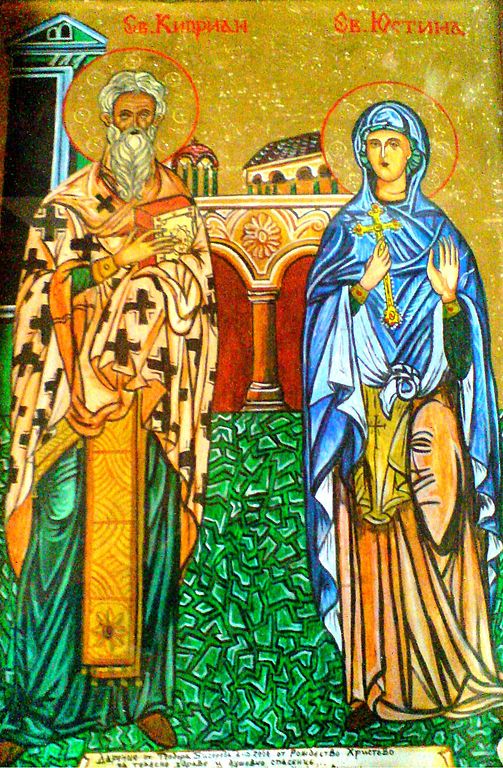
  • Some days ago, I was catching up with friends in these isolated times, and reading on how others are managing in their homes with reduced physical contact with others. I thought back to different times, places, and hardships. How others have navigated trying times. I thought of the Saints and of persons in history that have undergone trying times, illnesses, imprisonment, isolation, etc. and how they navigated long and short term difficulties, both at the individual and the collective. Going about my days and thinking about this, St. Justina of Antioch surfaced, or came to the surface.

    As per the Golden Legend, she was a beautiful maiden relentlessly pursued by the sorcerers Cyprian and Acladuis. Cyprian summoned the Devil to torment her and to inflame her with desire so as she would depart from her private vow of chastity, which she resisted through the sign of the cross. The torment got so acute that the Devil sent plagues and fevers to the city where she lived, letting it be known through prophets/seers that until Justina agreed to marriage many would die and suffer. This went on for 7 years until Justina, unmoved in her conviction yet moved by the plight of others, “prayed and succeeded in driving the pestilence from the country.” All the wiles of the Devil and the cunning of the sorcerers, both Cyprian and Acladuis, came to fruitless ends. Justina remained unswerving. “Thwarted at every turn, the Devil went back to Cyprian and stood shamefaced before him. ‘What?’ Said Cyprian to him. ‘You, too, defeated? Is your power so feeble that you cannot overcome one girl and get her in your power? So feeble that, on the contrary, she single-handedly defeats the lot of you and beats you all into pitiful submission? Tell me pray, where does this extraordinary strength of hers come from?’”†

    My thoughts here run parallel to St. Justina’s life, because all the wiles of the Devil and the sorcerers brought her and others to walk through dark times, of hardships and suffering. I emphasis dark because the artifices of her foes typically came under the blanket of night, and with illusory guises. The way I see it, she learned to navigate the dark and the shadows growing through each encounter in fortitude against her enemies.

    This has served as inspiration for me during these times, with uncertainty in the air dressing itself in doubts, anxiety, unnameable fears, shadows and confusion. Hence, I’d like to share a little prayer I wrote under the auspices of the Saint herself, with a reminder that if things get too dark and uncertain, she is the candle the burns in the darkness and shines a light upon the shadows.

    Holy Saint Justina

    Blessed Saint Justina

    Beneficent Saint Justina of Antioch

    Maiden, Martyr, and Healing Abbess,

    Courageous Saint and Brightest Candle in the Dark.

    Pray for us, now, and at the hour of our death. Amen.

    St. Justina St. Cyprian Icon Saints Hagiography
    Icon by Biso, Saints Cyprian and Justina who in 304, during the persecution of Diocletian, suffered martyrdom at Nicomedia (modern day İzmit, Turkey). Icon, gift from my family to church St.St Kiril and Metodi, Slivnitsa. 26 October 2009

    I’ve found that a small lit candle with this prayer does wonders. May we all cultivate the strength to persevere and flourish. Keep going.

    ~~~

    † Jacobus De Voragine, The Golden Legend: Selections, ed. and trans. by Christopher Stace, Penguin Books: London, England, 1998.

    Mist and Ether Natalia Lee Forty Tarot Divinatrix