• Sex in the court

    In May I began my oracular survey of the court cards, which can be read here starting with the Pages. Before I go any further, I want to address gender, or rather sex and the court cards.

    First a statement: as a diviner, I do not make distinctions a priori in regards to the male and female courts. What I mean by this is that I do not have a standard differentiating line prior to the question and the reading, of what sex the court cards will represent.

    For example, if someone were to ask about what to do about something that is inherently personal and subjective concerning their self (pertaining to their person-hood), and in the spread a mix of male and female courts, or all females or vice versa frame the answer, then I do not immediately jump into a list of gendered or sexed court card meanings and in the process, deviating from the answer to the question.

    Reading the court cards should not be about seeing sex or gender, only. Reading them should also be about going beyond identity, and identitarian divisions, beyond the self that is aware. Most importantly, the context to the question should frame how the diviner sees the court cards that pop up in a readingContext comes before meanings and identity, it establishes the foundation from which the diviner will speak.

    In micro, this approach looks like the following (with example questions):

    How do I love myself fully?

    Tarot del Fuego Marseille Tarot
    Tarot del Fuego by Ricardo Cavolo, published by Naipes Heraclio Fournier, Spain, 2014.

    You love yourself fully by carrying inside rather than outside your treasure. Loving yourself is about birthing the self within, instead of carrying your ego for all to see. It is the subtle art of self acceptance born from the heart.

    What does loving myself look like?

    Tabula Mundi Tarot In Minima
    Tabula Mundi Tarot In Minima, MM Meleen, Atu House, 2016.

    Loving yourself looks like a consistent culturing of the landscape of the self, watering the soil with the regular nurturing of the heart.

    A king of cups can be both male and female, furthermore, he can go beyond gender and stand in for concepts and ideas. Likewise, the queens can be male and more. This applies for all the court cards.

    Tarot del Fuego Marseille Tarot
    Tarot del Fuego by Ricardo Cavolo, published by Naipes Heraclio Fournier, Spain, 2014.

    I end here with the addition that yes, there are lines and frameworks within which diviners work and part from. First, there is context. Second, the court cards do have cartomantic definitions that define the patterns of what they represent. The queen of cups is a blonde lady, generally beautiful with light eyes, the queen of swords is a dark lady with a sharp face. The king of batons is an auburn haired, swarthy, middle aged man. Whatever these associations might be for you, excellent, hold them but also don’t forget to challenge them. To go beyond what you see, to let the cards go beyond what they represent. As I dive further into the court cards, remember they embody the premise of yes, and… In other words, the courts are what you see and also more

    Natalia Lee
  • Tarot and Art

    “Art plays with conventional forms, stretching the imagination towards liberation from constraints.” -Camelia Elias

    Art as a vehicle for moving the heart, stirring the soul, and confronting the self with the eternal, the non-discursive, the symbolic, the metaphorical. I start here because I recently participated in Camelia Elias’s most recent course offering, a one-day affair, Art Tarot. As a result, this post is about me expressing my ideas born out of what this excursion engendered in me.

    When speaking of art in relation to tarot, I find that tarot already functions as a vehicle for dislodging strictures, one that offers the space to question conventional forms, moving awareness and understanding beyond the quotidian.

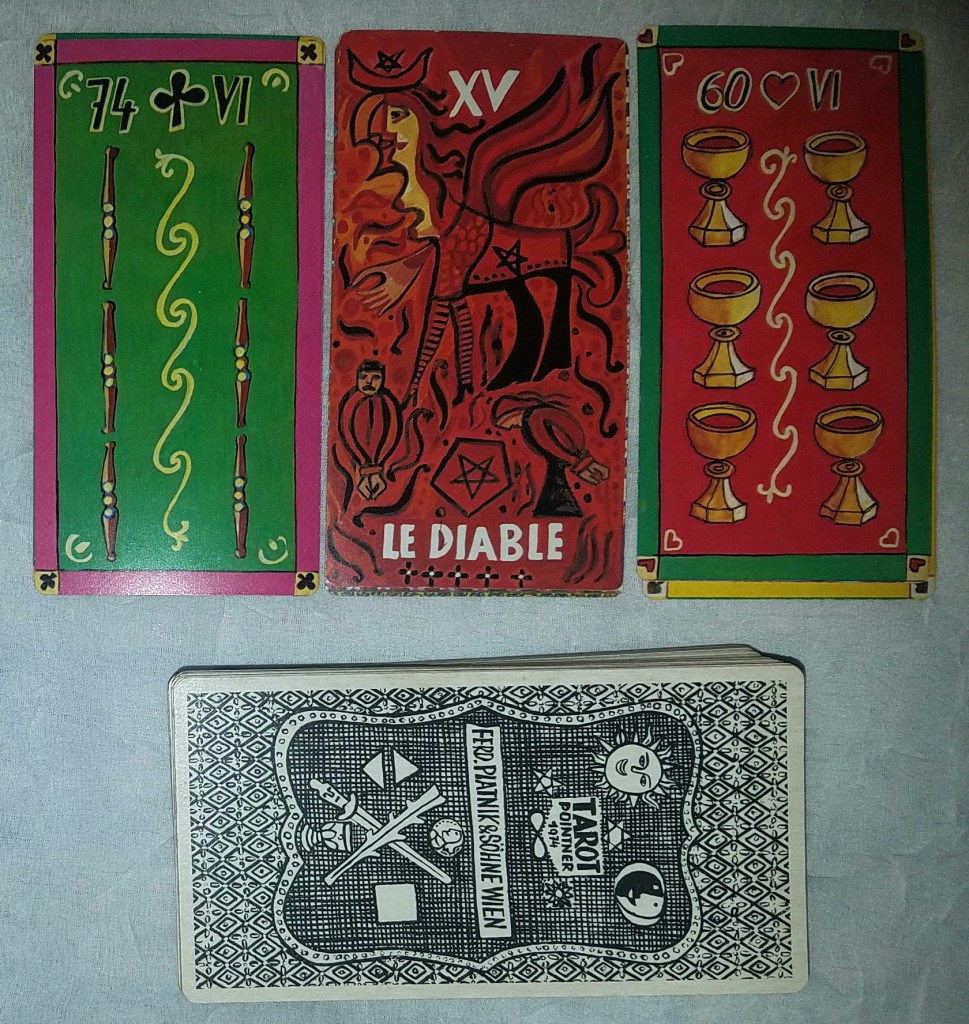
    Tarot Piatnik Wein Marseille Tarot
    Pointner Tarot, Ferd. Piatnik & Söhne Wein, 1974.

    I clarify, that the debate on what exactly constituents as art is unending, and I do not pretend to advance any particular aesthetic or claim. But I do think it worthwhile to consider some points as we shuffle our artistic tarot decks.

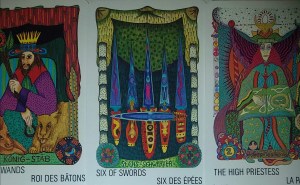
    Gypsy Tarot Tsigane Zigeuner Tarot de Marseille
    Gypsy Tarot: Tsigane Zigeuner Tarot, Walter Wegmüller, published by AGMüller-Urania, Belgium, 1982.

    In what way does the whole (78 cards) transgress the norm and moves the soul, and as a corollary moves the vision into new territory?

    In what way does it fail in doing so?

    In what way, whether in the ordering of the majors, their naming, their quantity (more than 78 cards), does the deck contextualize your point of view?

    Art tarot should be about pushing the boundaries, offering artists a platform to explore the symbol as it frames the soul of the human condition within the moment of reading the cards. While also offering the readers a space for exploring the artist’s perspective and aesthetic.

    All this is inherently socio-political, or at the very least it has the potential of being so, of pushing cultural normative boundaries. And that is good, tarot also has a place for that.

    Some of us have art decks that we do not know quite how to approach, ones that challenge our convictions and opinions. We as tarot readers should embrace these instances that challenge us, that makes us question our perhaps calcified opinions on what tarot should and shouldn’t be, and in this case, what art should and shouldn’t’ be. We as humans are always in the flux of changes, mutability is the only constant in life, hence all the more reason to lean into this flux, to let the image, the symbolic, the rhyme move our soul and our sight into new and perhaps even unknown territory.

    Besides, beyond contextualizing our self in relation to any given art tarot, considering the points that stand out in any given tarot deck can refine our awareness of space, of the subjective, and by consequence of the rhyme in the images.

    “One of the primary functions of art is to dislodge our sense of familiarity, to induce in the viewer a sense of alienation and dis-ease, thus opening the door to the darkness within.” -Camelia Elias

    In summation, I might not have said too much, but perhaps as you shuffle your tarot decks, consider these already stated questions in relation to how they unveil the darkness within:

    • In what way does the whole (78 cards) transgress the norm and moves the soul, and as a corollary moves the vision into new territory?
    • In what way does it fail in doing so?
    • In what way, whether in the ordering of the majors, their naming, their quantity (more than 78 cards), does the deck contextualize your point of view?

    ~~~

    Camelia Elias, Art Tarot, Aradia Academy http://www.aradia-academy.com/, June 2018.

    La Maga Tarot

  • The paths ahead

    by

    I am back from a brief hiatus, I apologize for those who follow this site. Besides May and June being a dense month for me, I also re-evaluated my screen time and better organized my day for optimal health. This meant that I had to reschedule the time spent in front of my computer, reduce said time, and limit many other things as well. The density of these past two months were not just of a material nature, I also had workings underway that took up the little free time I found myself with.

    Nonetheless, I am back offering a monthly reading, which I very much enjoy doing, for the month of July.

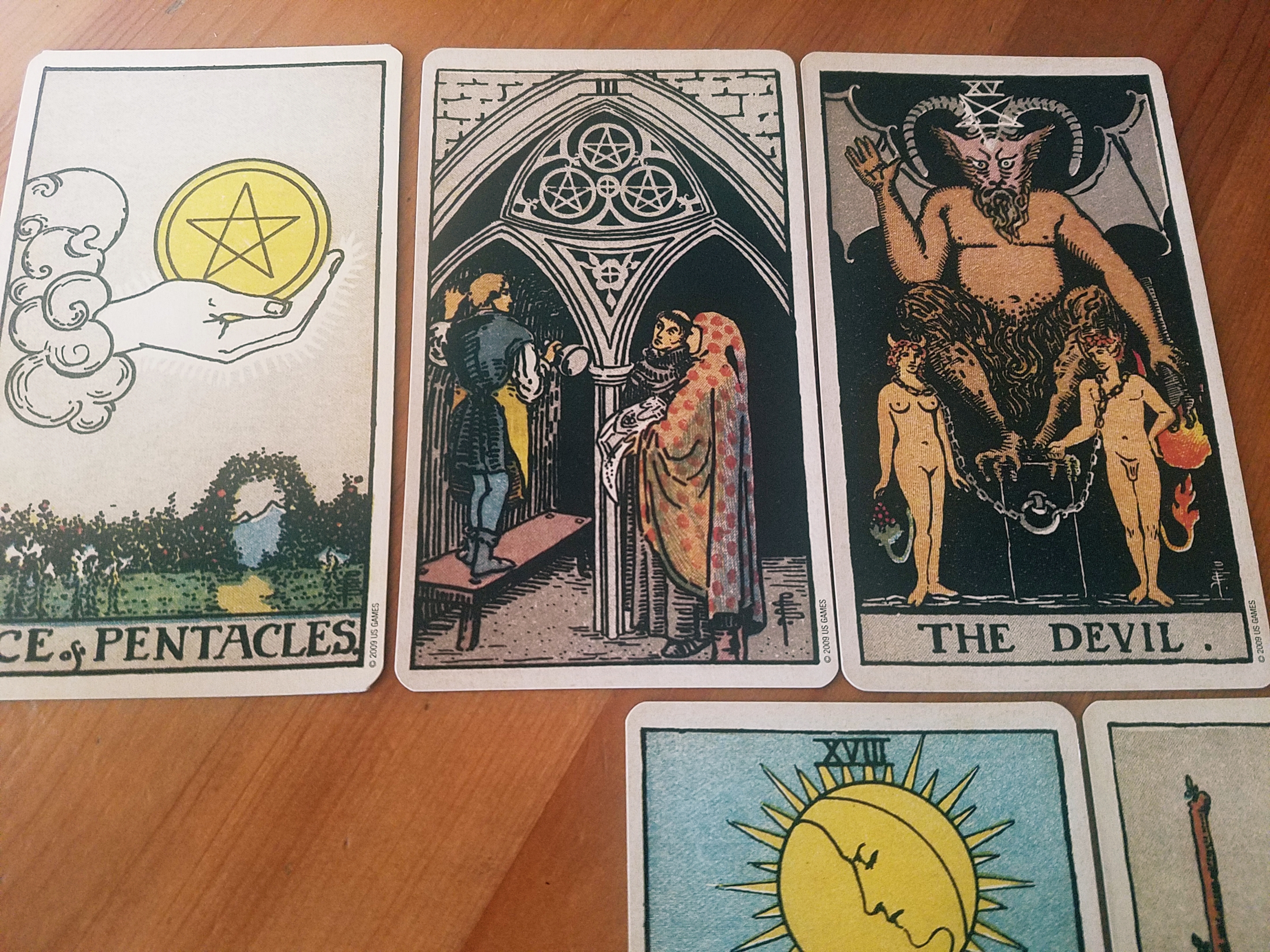
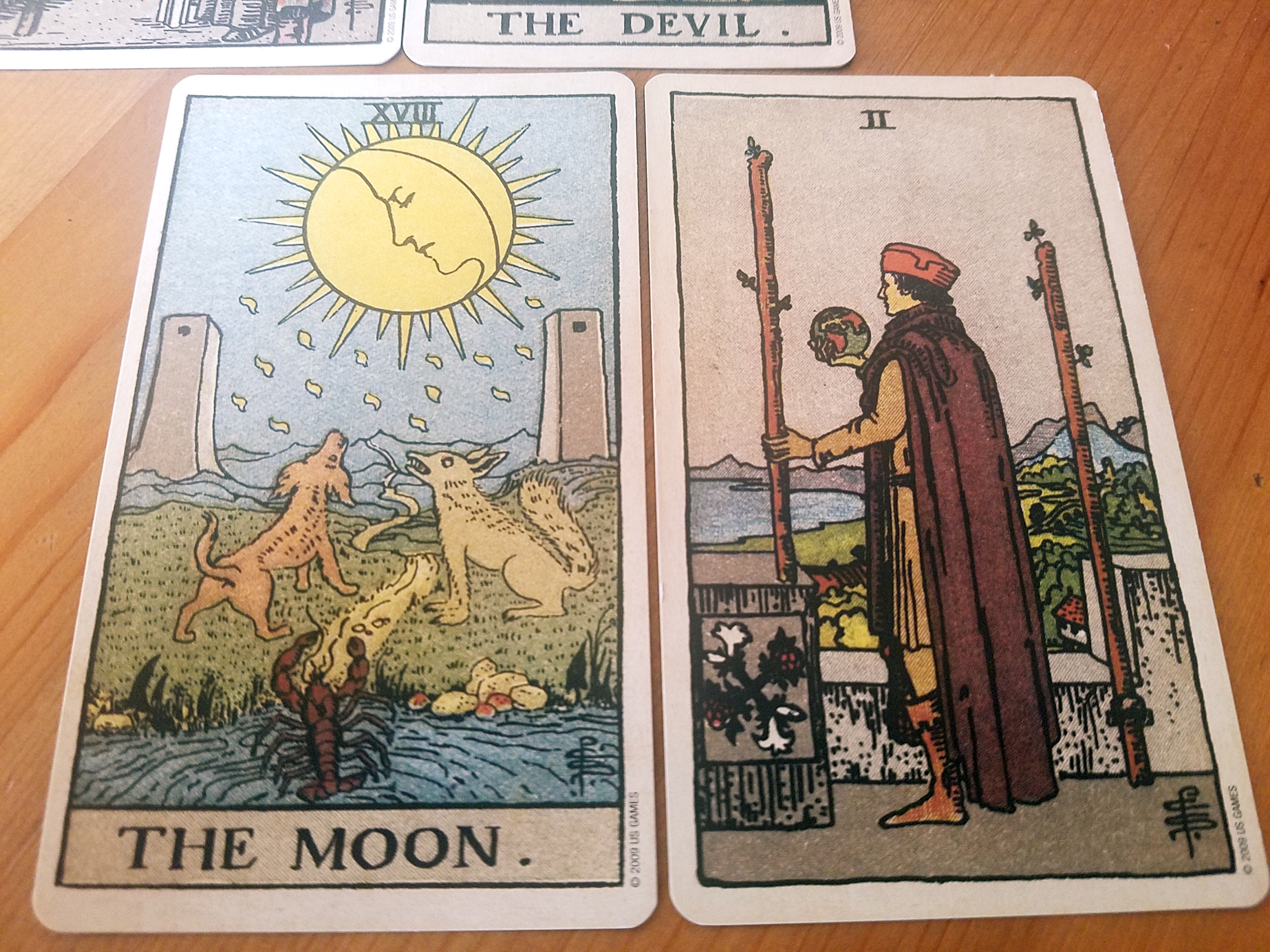
    The Centennial Smith Waiter Tarot
    The Centennial Rider Waite Smith Tarot, US Games, 2009.

    July sees our landscape reconsidered and re-contextualized as new opportunities make headway, yet the progress is slow. We should reconsider engagements and contracts that bind us into constrained positions that do not benefit us in relation to that which we want to achieve in regards to money and career.

    The Centennial Smith Waite Tarot
    The Centennial Rider Waite Smith Tarot, US Games, 2009.

    It looks like these new opportunities allude to unknown and unclear territory. How can we approach what presents itself with a clear head, thinking on what may be unveiled as said opportunities start taking shape in our lives as career or home changes?

    Keep an open mind for whatever pops up in your life this month, and be honest with your self and what you want for the year ahead. This dynamic might not engender too many tensions but it might make your judgement clouded as you look ahead and find the landscape unclear and dubious.

    Whatever lies ahead, it is in your hands how you turn it in your favor.


    La Maga Tarot


  • The pages of the court

    Some time ago I began an overview of the Tarot de Marseille pips, which can also be seen as playing card pips. This overview shared my way of seeing the pips, how I read them in a spread, and how they interact with other cards. I have also done something similar with The Trumps but in poetry form, which can be found here. I have yet to complete the exploration of the wands or batons suit, that is still forthcoming. Now I begin my survey of the court cards, starting with the knaves, pages.

    The Spanish Tarot Marseille Tarot
    The Spanish Tarot, published by Fournier, Spain.

    Briefly, before I dive in, I want to add that the foundation for my view of the pips is heavily influenced by Camelia Elias’s approach, which is as follows:

    “Kings: symbols of power; Queens: emblems of truth; Pages: symbols of initiation; Knights: emblems of development.”*

    Now, I approach the courts in an oracular fashion, as if they themselves were speaking to me. I begin with the Pages which are the symbols for beginnings, initiation, and innocence (excepting the page of swords).

    Page of Batons:

    “I hold an unrefined skill in my hands, searching for someone or something to help me use and refine it. I admit I am slightly clueless. I announce possibilities on the horizon, a message of work on some new endeavor.”

    The Spanish Tarot, Marseille Tarot
    The Spanish Tarot, published by Fournier, Spain.

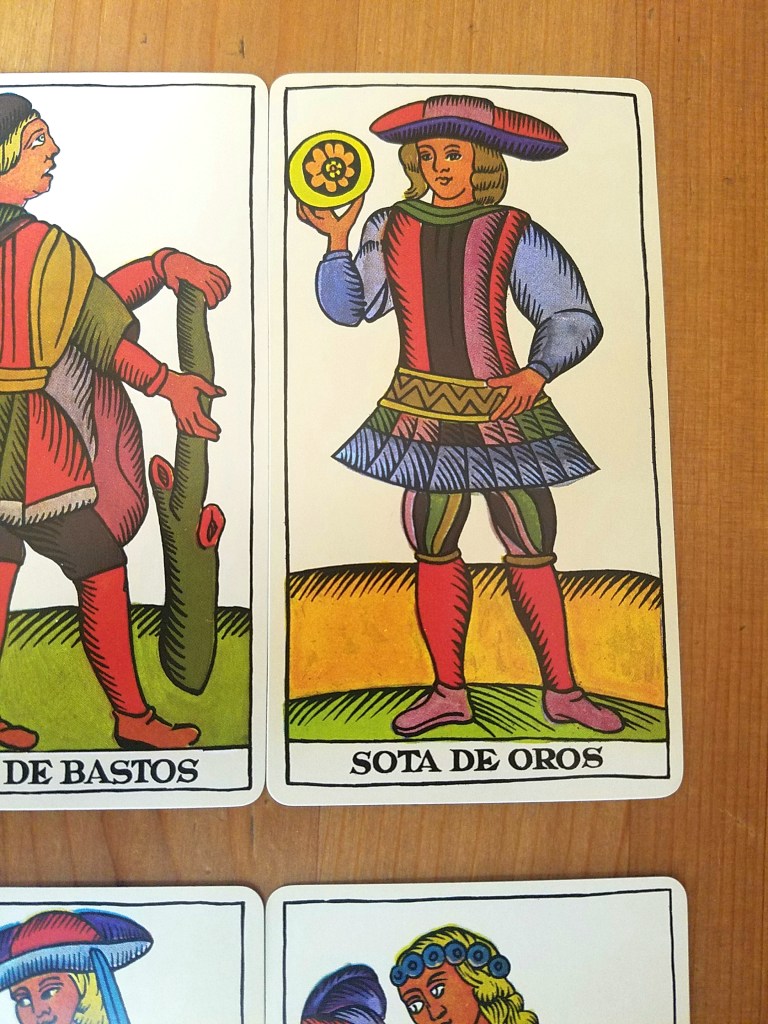
    Page of Coins:

    Haphazardly arrayed in finery, “I hold a coin of potential. I seek gain in all its manifestations, cunning and the desire for knowledge drives me. I am a student, or perhaps a new enterprise.”

    The Spanish Tarot, Marseille Tarot
    The Spanish Tarot, published by Fournier, Spain.

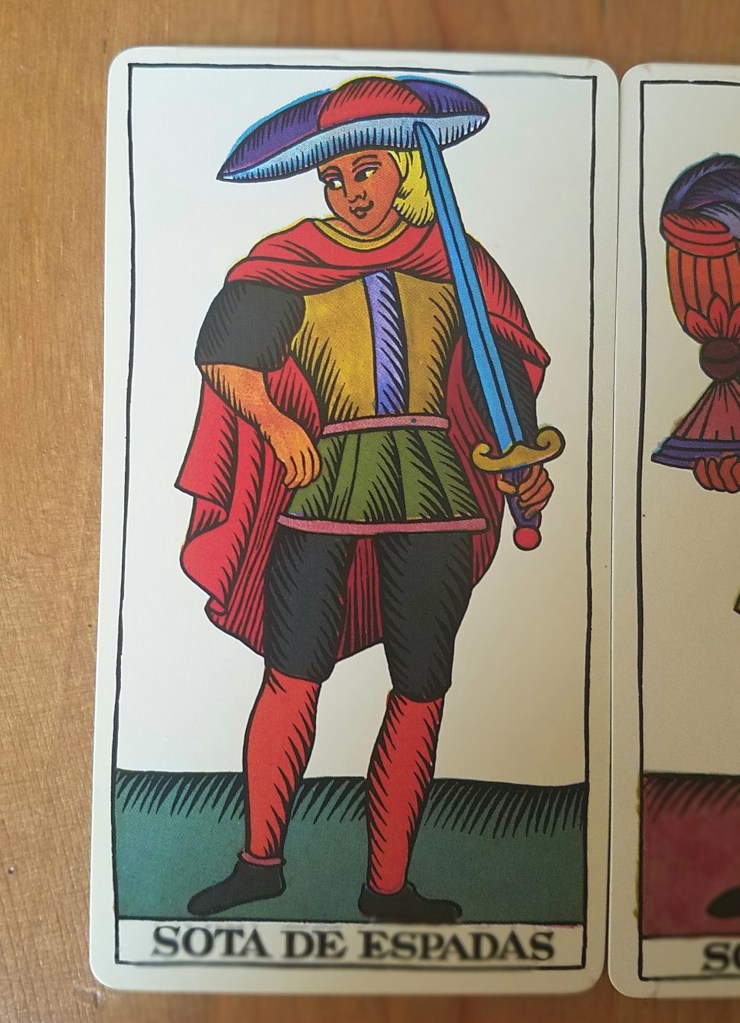
    Page of Swords:

    “What others consider cunning have nothing on me. With cape and hat, in subtle raiment, I hold sneaky thoughts disguised. My sword is a tool of power, one I wield maliciously and carelessly, and I wield it unsheathed. I am the hidden that seeks to harm, the shadowy and undisclosed. On occasions I am a message from the dead.”

    The Spanish Tarot, Marseille Tarot
    The Spanish Tarot, published by Fournier, Spain.

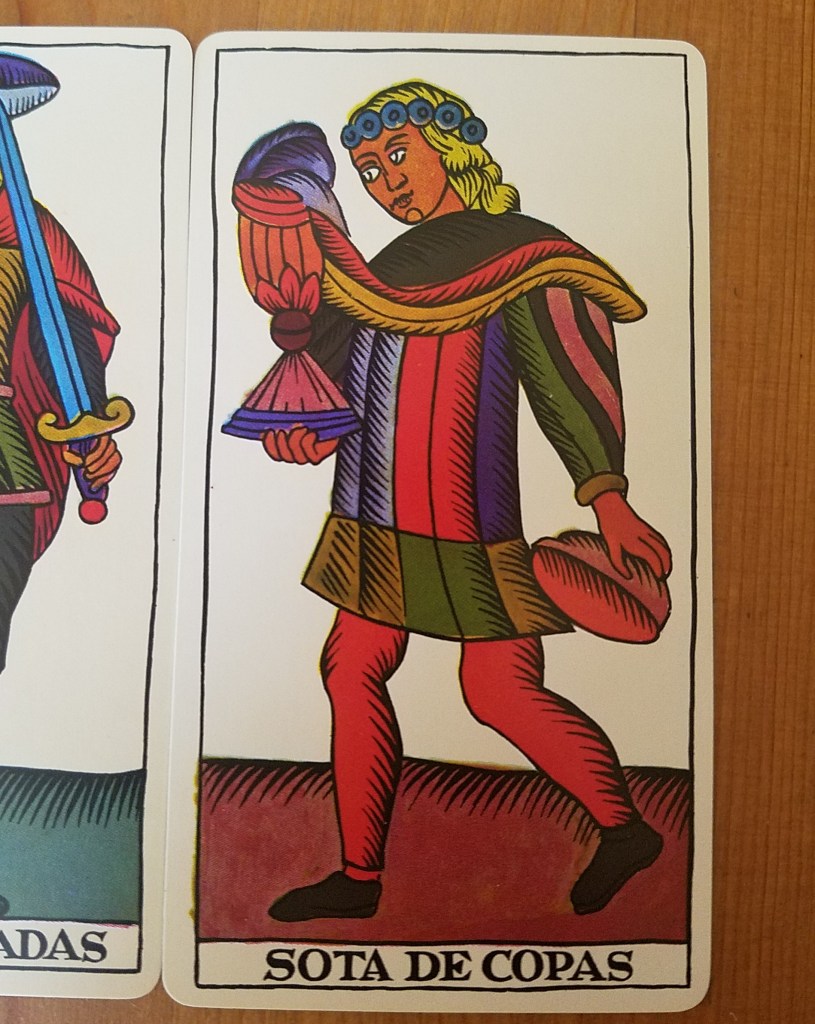
    Page of Cups:

    “I brim with possibilities, my cup spilling outward. I am youth and vitality, a message of love or a compliment.”

    I should reiterate, my entire approach is visual and contextual. What I see, and how what I see speaks of the question at hand. It is interesting to approach divination in this manner as it forces you to be sharp in your seeing and in your words.

    ~~~

    *Marseille Tarot: Towards the Art of Reading, Camelia Elias, Eyecorner Press, January 2015.

    La Maga Tarot